
Why We Celebrate Diwali: Light Over Darkness
The deeper meaning of the festival of lights across regions, traditions, and inner symbolism.
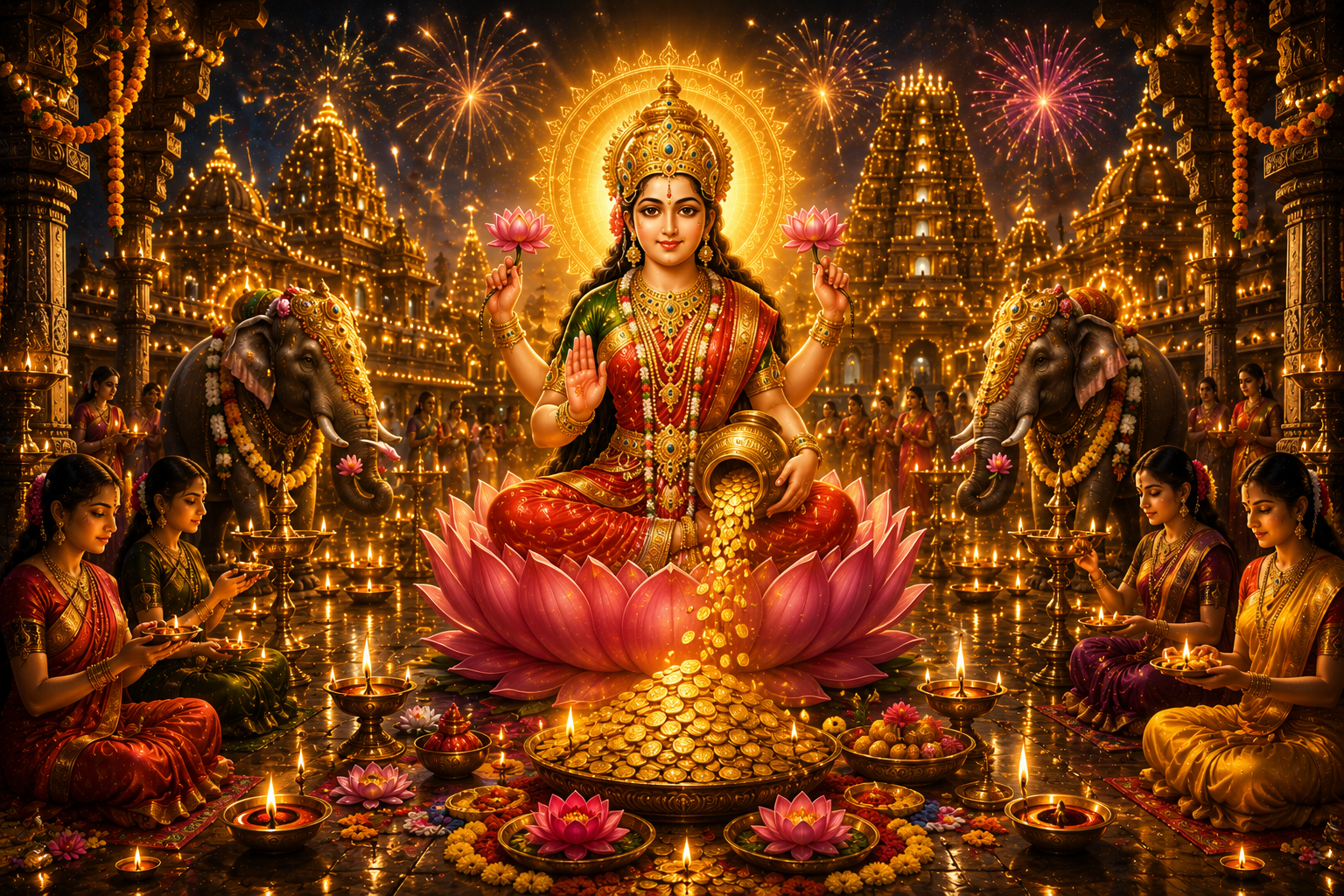
More Than a Festival of Lights
Diwali marks the triumph of light over darkness, knowledge over ignorance, and good over evil. Across India, it is celebrated for several reasons:
- North India — Lord Rama returning to Ayodhya after fourteen years of exile
- South India — Krishna defeating the demon Narakasura
- Western India — Lakshmi, goddess of prosperity, visiting devotees' homes
The Inner Diwali
The outer lamps mirror the inner jyoti — the light of awareness that dispels the darkness of ego. Each diya lit on the threshold is, in truth, an invitation to the divine within.
Related articles in Festivals & Rituals
Goddess Lakshmi — the luminous consort of Vishnu and the divine embodiment of wealth, grace, beauty, and auspiciousness — is one of the most universally beloved deities in Hinduism. Worshipped daily in countless homes, invoked at every threshold, and celebrated grandly at Diwali, she is the divine principle that makes all flourishing possible. This encyclopaedic guide covers her origin, the eight Ashtalakshmi forms, her relationship with Vishnu, key mythology, iconography, mantras, festivals, and the profound Vedic philosophy of what wealth and abundance truly mean.
Mahashivaratri — the Great Night of Shiva — is the supreme festival of Shaivism and one of the most significant nights in the Hindu calendar. Observed on the fourteenth day of the dark fortnight in Phalguna (February–March), it is a night of vigil, fasting, prayer, and deep meditation. This comprehensive guide covers all the mythologies of Mahashivaratri, the spiritual science behind night vigil, complete puja rituals, the four pahars (watches) of the night, celebrations at the twelve Jyotirlingas, and the profound inner significance of this most sacred of all nights.
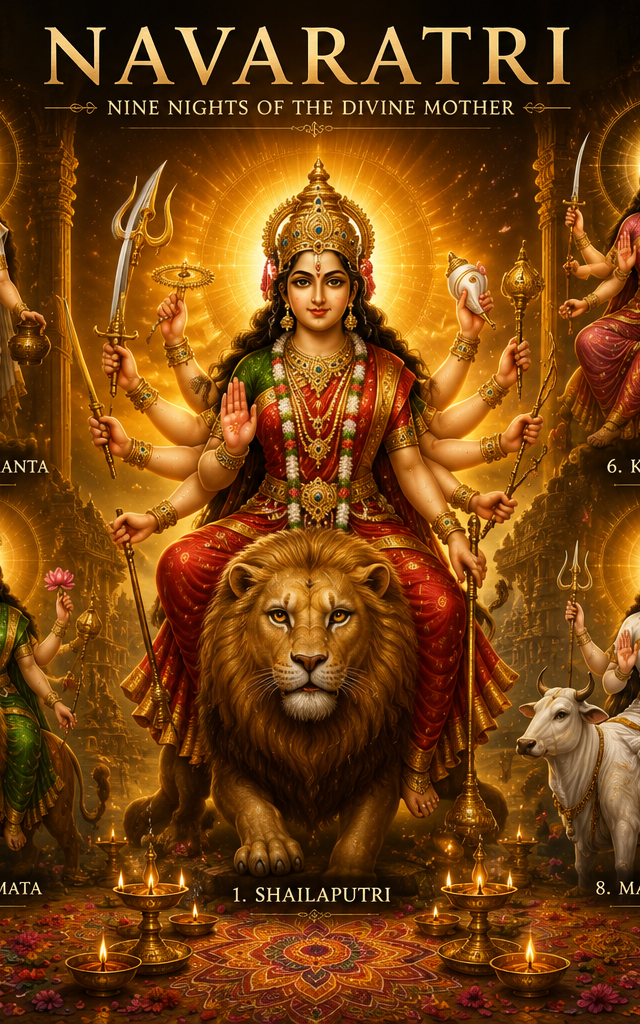
Navaratri — the nine-night festival of the Divine Mother — is one of the most celebrated festivals in Hinduism. Explore its mythology, the nine forms of Devi, and how it is celebrated across India.
Comments(0)
Loading comments…